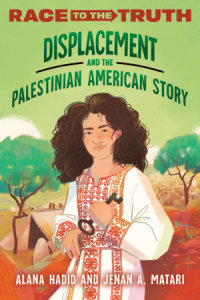

Displacement and the Palestinian American Story

Displacement and the Palestinian American Story is a part of the Race to the Truth collection.
Until now, you've only heard one side of the story: that Israel was a land without a people, for a people without a land. But there were people on the land of Historic Palestine, and their lives were forever changed when Israel was established there. Many were forced from their homes, and made their way to America. Here's the true story of America and Palestine, from the Palestinian perspective.
When you think about Palestine, what comes to mind? An arid desert and a history too complicated for any young person to understand it? The truth is, Palestine is a diverse environment with a rich history, one that is far less complicated than you've been told.
The creation of Israel didn't just redraw borders. It created one of the largest, longest-lasting refugee populations in the world, with millions of Palestinians still carrying the trauma, the keys, and the hope of return. The story of this region, and America's role in it, has been carefully represented to omit the Palestinian side of the story. From olive groves, to music as resistance, to a longing to return home, this is the true story of Palestine, told from the perspective of Palestinians displaced to America.
An Excerpt fromDisplacement and the Palestinian American Story
Chapter 1
The Land and Its People
Palestine is a region in the eastern Mediterranean that has a variety of landscapes-from coastal plains to rolling hills, from fertile valleys to dry deserts. Its diverse terrain has heavily influenced the lifestyles and cultures of Palestine's inhabitants and made it a desirable slice of land that multiple empires have attempted to colonize-something Palestine is still facing today. When a foreign power invades and takes control of Indigenous people's land and resources, it is colonizing that land. Imagine someone from another part of the world one day showing up to your home and saying it's now theirs. This is what it means to be colonized.
Fertile Lands with the Proper Custodians (About the Land)
Palestine in the 1800s and early 1900s was famous for its beautiful hills, wide valleys, ancient cities, and rich farmland. With its nutrient-dense soil, perfect mix of sunshine and rain, and access to fresh water, Palestine has been celebrated since its beginning for its olive groves, palm trees, and wheat fields. Farmers have also grown figs, grapes, oranges, and pomegranates for centuries. The Jordan River flowed freely through the land, and the Dead Sea-its shores the lowest point on dry land-was already famous for its salty waters. Throughout Palestine, small villages where people farmed, raised animals, and traded goods lived in unity with the land.
It is precisely because the land is so fertile and its location is so beneficial for trade that many outside empires throughout history have wanted control over it. But for the Indigenous people of Palestine, the land is much more than just soil-it's a relative.
Palestinians have been farming the land for generations, passing down knowledge of when to plant, how to rotate crops, and how to care for olive trees-some of which are thousands of years old. Their traditional farming techniques, which are still used today, keep the soil healthy and productive.
The Landscapes of Palestine
Located in the eastern Mediterranean, with many different types of land and climates, Palestine's landscape consists of warm coastal plains, cool hilly areas, fertile valleys, and dry deserts.
The coastal plains, next to the Mediterranean Sea, are known for their rich soil and mild weather, making them great for farming. Cities like Gaza and Akka also became important places for trade, where goods and ideas were shared between different peoples and cultures.
The central highlands, including places like Ramallah and Nablus, offer a cooler climate. This land was traditionally used for farming as well, especially olive trees, which are very important to Palestinian culture. This area was full of farms and olive groves, which helped support the local economy and provided food for the people-something still true today!
To the east is the Jordan Valley, known for its land deep below sea level. The warm climate and fertile soil of the region made it perfect for growing crops like dates, citrus fruits (like pomelo), and grains, providing food for many communities.
In the south, the Naqab Desert is dry and hard to live in. However, Bedouin communities have lived there for many centuries. They adapted to the tough environment by raising animals and following a nomadic lifestyle, moving from place to place with their families, and often with cattle, to find food and water.
These different areas of Palestine helped shape how people lived, their food traditions, and their culture. The connection between the people and the land has been a key part of Palestinian life for generations, long before outside forces tried to change it.
Palestine's Major Trade Cities
Major cities like Jerusalem, Yaffa, Haifa, and Nablus-all of which still exist today-were essential centers of trade, culture, and learning in Palestine.
Jerusalem was and remains a sacred city for Muslims, Christians, and Jews.
Yaffa, a thriving port city, was world-famous for its Jaffa oranges and bustling markets where traders from around the world came to buy and sell goods. Jaffa oranges used to be one of Palestine's major exports, mainly to Europe, including England, Italy, and France.
Haifa was known for its diverse population and its large port, making it an important hub for commerce and travel.
Meanwhile, Nablus was renowned for its production of olive oil, Nabulsi soap, and traditional sweets, all of which contributed to its reputation as a center for craftsmanship of exportable goods and trade.
These cities played a crucial role in Palestine's rich history and economy, shaping the daily lives of the people who lived there. Later in this book, we'll learn about the present-day status of these cities and many others (including villages) and what colonization has done to them.
Deep Roots: The Olive Trees
Olive trees are one of the most recognizable symbols of Palestine and Palestinians, and their harvest contributes greatly to the Palestinian economy.
Palestine's olive trees are ancient, especially in areas like the West Bank and the village of Al-Walaja near Bethlehem, with many standing strong for thousands of years. Some of the oldest olive trees in Palestine are estimated to be over three thousand years old. These trees are sacred and deeply tied to Palestinian heritage, culture, and resistance.
Olive trees have been cultivated in Palestine for millennia, and Palestinian farmers continue to harvest olives and produce olive oil using traditional methods passed down through generations. This practice represents both a livelihood and a way to preserve a connection to ancestral land amid ongoing attempts to erase all existence of Palestinians from historic Palestine.
The olive harvest takes place every year in Palestine from mid-October to early November, depending on the region, climate, and the ripening of the olives. The harvest is a communal activity, with families, neighbors, and even international volunteers coming together to pick olives. This is a significant time for Palestinian farmers and communities, as olives and olive oil are essential to the economy, culture, and traditions. Harvesting the olives is not just about agriculture-it's a cultural event that reinforces Palestinian identity and resilience.
Palestinian Culture: Music,
Dance, Tatreez, and Food
Many Palestinians in Palestine today are direct descendants of those who have lived on the land for thousands of years. There is proof of this in how cultural traditions once practiced in ancient times are still being practiced by Palestinians today. Art and other cultural aspects of Palestinian society, such as music, dance, food, and Tatreez (Palestinian embroidery), while influenced heavily by current politics, have remained virtually unchanged in the way they are expressed today.
Music and the Tarweedeh: Joy and Resistance
Music has always been deeply rooted in Palestine's cultural traditions and plays a significant role in the community and in Palestinian life, marking celebrations, religious events, and today, even resistance. It has been shaped by Arab, Ottoman, and Mediterranean influences. Traditional Palestinian music often features instruments like the oud (a pear-shaped stringed instrument) and the tableh (a goblet drum).
Palestinians are also well known for their folk music that pre-dates the Ottoman Empire, with many
different styles of singing. Styles that range from the Arabic maqamat (musical scales) are called mawwals, nasheeds, and zajels. Styles that fall within a folkloric musical and poetic tradition are called Agani, Muhaha (chanting), and Sahajeh. These types of folk music are traditionally sung by women during activities done as a group, such as harvesting wheat and olives, or other agricultural tasks.
A famous style of folk song that still has a strong presence in Palestine today is the Tarweedeh. The Tarweedeh is usually performed by women in moments of grief or serenade, when someone is about to go on a long journey or into battle, or when a bride is getting married and moving far away. This style requires the elongation of phrases, words, or sounds, making it distinct from other traditional folk music. The Tarweedeh has always held a deep significance, especially during times of political unrest.
Dabke: The Rhythm of Resilience
Dabke today is known as a lively folk dance that is performed at weddings and other celebrations. Like Tarweedeh, Dabke has deep cultural meaning. The dance's origin is believed to be rooted in Canaanite rituals of communal agricultural work, specifically stomping mud roofs to compact them, and eventually included the act of pounding seeds into the dirt, helping crops grow.
In the 1800s, Dabke was primarily a village dance performed during harvest seasons, family celebrations, and community events. It involves rhythmic stomping and synchronized movements meant to unite people and symbolize strength and connection to the land. In the twentieth century, and especially after the Nakba (meaning "catastrophe" in Arabic, it is what Palestinians call the first major forced expulsion of our families in 1948 during the creation of Israel) and the Israeli occupation that began in 1967, Dabke transformed from a celebratory dance into a symbol of Palestinian resilience.
Today, in addition to still performing it for celebratory reasons, Palestinians perform Dabke at protests to express and validate their cultural identity in the face of erasure. The loud stomping and synchronized movements represent defiance and unity against occupiers.
Tatreez: Threads of Identity
"Tatreez" in Arabic translates to "embroidery" in English, stemming from the word "tarza," meaning "to stitch." It is a form of traditional Palestinian embroidery that weaves together cultural history, identity, and resilience, and it's an art form that tells a story about the person wearing the embroidered pieces.
Tatreez has been passed down through generations, usually by Palestinian women, and carries deep meaning in its patterns and stitches. Tatreez is often found on Palestinian dresses called thobes, and each design, from the fabric used for the dress to the symbols embroidered on it, as well as the colors of the threads and size of the stitching, tells a unique story about family, heritage, and regional identity (in some cases it even reveals a woman's health, marital, and financial status).
In addition to its cultural significance, Tatreez is an empowering practice, and today it offers Palestinian women (mainly refugee women) a means of economic independence. By selling their embroidered works, women have sustained themselves and their families, especially during times of displacement and occupation.
The Languages of Palestine
Palestine has been home to many languages throughout history due to its location as a cultural crossroads.
3000 BCE-700 CE: Canaanites who lived in the area spoke their Indigenous languages (Phoenician, Moabite, and early Hebrew). Hebrew was used as a daily language but later declined after Roman rule, though it was preserved in religious texts. Aramaic (likely the language spoken by Jesus) gradually became the dominant language. Greek was introduced during Hellenistic rule, but it was used mostly in cities and by elites, and Latin was used by Roman officials and administrators during Roman rule.
600-1800 CE: Arabic became the dominant language after the Islamic expansion and is still the primary language of Palestinians. Syriac (a dialect of Aramaic) was used by some Christian communities and is still spoken in small groups. Turkish was used for administration during Ottoman rule but was not widely spoken by Palestinians.
1800-present day: The Palestinian dialect of Arabic is the dominant language of Palestinians. Hebrew was reintroduced with Zionist settlement and imposed under Israeli rule, and English and French were introduced during British and French colonial rule and are still used in education and diplomacy. Yiddish and Ladino are spoken by some Jewish communities, though they've largely been replaced by Hebrew. Armenian and Circassian are spoken by small Armenian and Circassian communities in Palestine.
Food: Flavors Passed Down
Modern Palestinian food has a long, rich history that goes back thousands of years to the time of the Canaanites-an ancient tribe of people whose presence in Palestine can be traced back to at least three thousand years ago, whom modern-day Palestinians are descended from. Canaanites were farmers and foragers who grew olives, wheat, barley, figs, and dates. Many of the ingredients they used are still common in Palestinian kitchens today. Dishes such as lentil soup, taboon bread (flatbread baked on hot stones), and those made with olive oil and herbs such as za'atar (a type of wild thyme native to Palestine) have roots that go back to ancient times.
These include two of the most loved Palestinian dishes today: msakhan and maqlouba. Msakhan is made with roasted chicken, onions cooked in lots of olive oil, and the dish's signature spice-sumac-all piled onto fresh flatbread. It became popular for big family meals in villages where olive oil was freshly pressed. Maqlouba, which means "upside down" in Arabic, is a dish made by layering rice, meat, and vegetables in a pot and then flipping it upside down when served. Some believe it has roots as far back as the Abbasid period (over one thousand years ago), and it's still made today for special occasions.
Sharing food is a big part of Palestinian culture. Meals are often eaten together, with family, friends, and neighbors sitting around a big tray and eating with their hands or pieces of bread. For Palestinians, food is more than just a way to satisfy hunger-it's a way to connect and pass down traditions. Feeding others is one of the most important ways that Palestinians show love.
While food might seem like no big deal, it is deeply political. It's something that can be used to connect Palestinian people to our culture, especially when other aspects of our identity have been stolen.
"The Holy Land":
A Multifaith Epicenter
For centuries, Palestine was a multifaith epicenter, where the three Abrahamic faiths and their followers-Muslims, Christians, and Jews-lived side by side, rooted in the same land. Cities such as Al-Quds (Jerusalem), Al-Khalil (Hebron), Beit Lehem (Bethlehem), Al-Nasira (Nazareth), and Akka (Acre) were not only sacred religious sites but also home to diverse religious communities that coexisted, traded, and shared cultural traditions. Jerusalem, in particular, held deep spiritual meaning for all three Abrahamic faiths. Today, it is where the Al-Aqsa Mosque, the Church of the Holy Sepulchre, and the Western Wall are all located-each one woven into the daily life of the city.
Under Islamic rule for over a millennium, Palestine became a center of tolerance and protection for religious minorities. The Ayyubid dynasty and Ottoman Empire, in particular, maintained systems that respected different religious communities, allowing them to govern their own affairs through local courts and religious councils. Christians celebrated holidays openly, Jewish communities thrived in cities like Safad and Al-Khalil, and Muslims safeguarded religious diversity as part of their societal fabric. Pilgrims from around the world traveled to Palestine's holy sites, contributing to its global reputation as a spiritual crossroads.
A Personal Note About the Authors' Families and Their Historical Contributions in Palestine
Daher al-Omar:
A Relative of Alana Hadid
Daher al-Omar (1689-1775) was a Palestinian Arab leader and the ruler of the Galilee in the eighteenth century, best known for building a partially independent state in northern Palestine under Ottoman rule. From his power base in Akka (Acre) and later Tabariyya (Tiberias), Daher established a region of relative stability, religious coexistence, and economic growth. He sought to turn Palestine into a safe and thriving trade hub, encouraging merchants from across the Levant and the Mediterranean to do business in his territories.